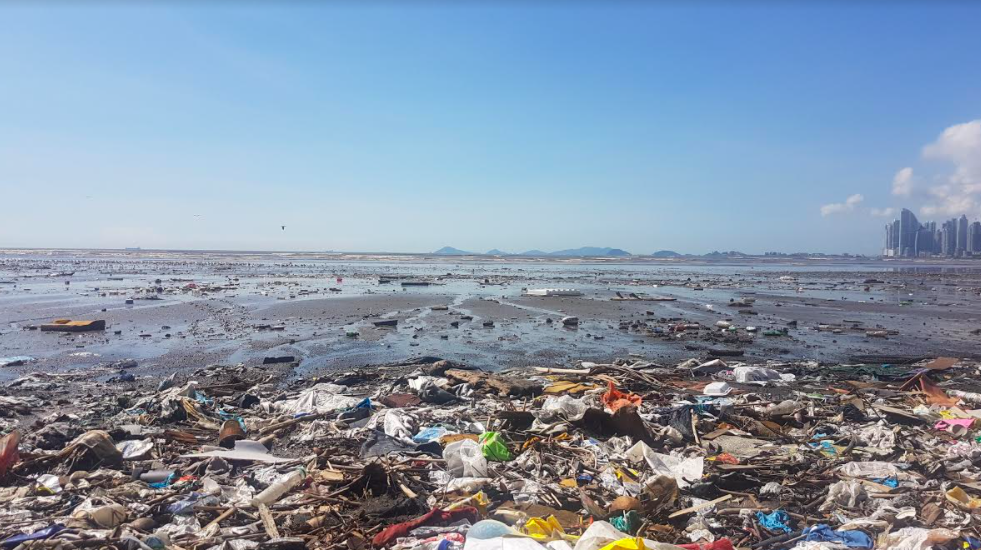

Gold and precious metals in electronic waste
In the introduction, let’s talk a little about electronic boards and the valuable wastes caused by them.
The electronic board is an independent and physical part that mechanically holds the electronic parts on itself and enables their electrical connection using conductive paths.
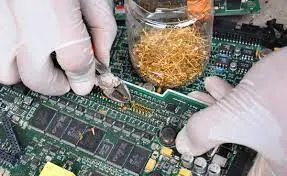
What makes these waste boards valuable are the conductive parts in the electrical connections of the boards.
You might think that this metal is used in electronic boards because of the high electrical conductivity of gold. If among the valuable conductors, silver has the highest conductivity, and the second rank of conductivity belongs to copper metal, and gold is in the third rank.
You may be wondering why gold metal is used in electronic boards with such a high price.
The main reason for this issue is the oxidation or rusting of competing metals of gold. Silver and copper are oxidized over time and reduce performance in components such as RAM and CPU.
Gold shows more resistance to oxidation in front of temperature, electric current and frequency compared to silver and copper metals.
Let’s examine some important computer components in terms of the use of gold in their board:
1- CD and DVD driver:
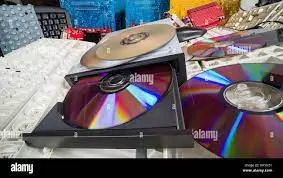
In general, old models are more attractive for recycling due to having larger boards and more chips.
But in SND and SATA models, the boards have become much smaller and the number of chips has also decreased.
On average, about 8 to 9 kg of IC chips are extracted from every 100 kg of board in CD and DVD drivers. And from each kilogram of AC chip, about 2.3 grams of gold is recovered.
2- CPU:
CPU is the main and richest electronic component for gold recycling. But many of these CPUs contain small amounts of gold.
The highest amount of gold is found in CPUs made between 1960 and 1970. In the following years, significant amounts of gold were used in Intel versions such as 386 and 486. These amounts of gold were used in the form of thin gold sheets on the back and on the CPU, pins and connectors.
In today’s CPUs and after Pentium 4, instead of gold, copper and nickel were used in the internal circuits and the connection of transistors inside the CPU, and the use of gold was limited to very thin plating on the pins. Today, recycling gold from CPU is not cost-effective.
3- RAM
Rum recycling is always economical and has a significant profit because it contains large amounts of gold, silver and palladium.
But the important point is that the amount of these metals in RAMs is very related to the age and different models and how to recycle it.
Rums are divided into three categories, each with a different amount of recycled gold. These types of RAM are: DDR2 / DDR / DDR3 / RDRAM /
On average, the amount of recycled gold from one kilo IC chip without a base is about 1.2 grams from DDR RAMs, about 3.75 grams from DDR2 and DDR3 RAMs, and about 5 grams from RD RAMs. will be.
4- Telecommunication boards
Telecommunication boards are one of the highest quality electronic boards and one of the best options for recycling precious metals.
Because telecommunication boards not only contain valuable parts such as processors, various ACs and chips, surface capacitors, etc. In many cases, these boards also contain gold amounts.
Also, in these boards, there are some parts plated with gold, which are also a good source for recycling gold.
5- Mobile phone boards
It is interesting to know that one kilo of old mobile phones including Nokia, Sony Ericsson, Alcatel, Siemens, and old Samsung buttons has one gram of 24 carat gold and 6 grams of silver.
Of course, in some very old mobile phones, such as Alcatel and Siemens, which were produced before 2002, it varies up to 1.5 grams of 24 carat gold.
And some interesting statistics about electronic waste:
- About 34 kg of gold is recovered from the recycling of one million smartphones, which is a significant figure.
- About 155 grams of gold is extracted from the recycling of every 200 laptop boards.
- About 155 grams of gold is extracted from the recycling of each ton of computer circuits of monitors.
GAIN solutions for e-waste collection
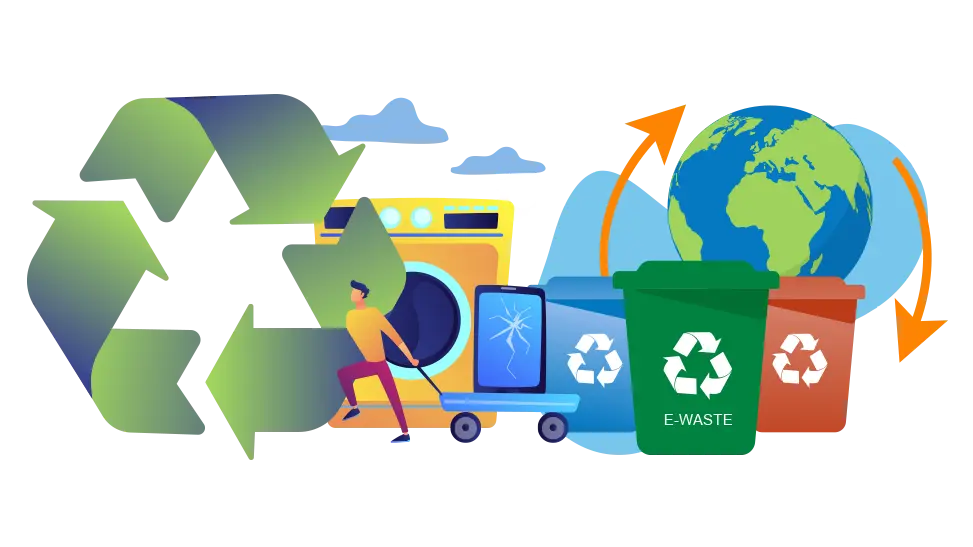
That being said, e-waste is very valuable and processing it to get its precious raw materials would be expensive. GAIN as a green startup has a special planning to collect these boards and computer parts. By offering monthly calls to collect the electronic boards of its customers’ loyalty club, this company offers the highest price offer for the purchase and transportation of these boards to its subscribers.
This company intends to prevent the burial of this type of waste by reviving old parts through repair, improvement or recycling of all their tools.
Wait for the start-up calls…
#gold #gainsolutions #gainrecycling #ewaste