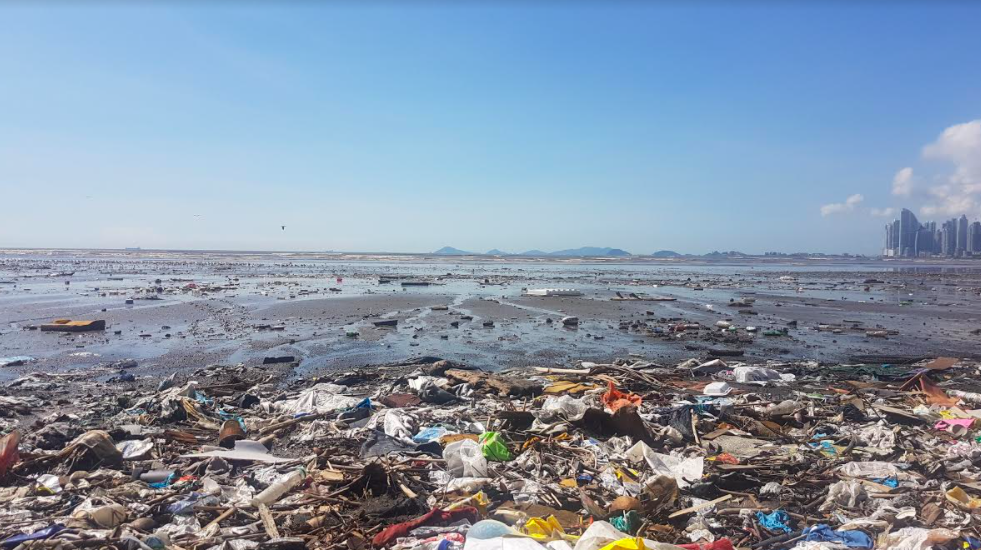

Smart management technologies and urban recycling system
Many experts have predicted that the accumulation of waste worldwide will reach more than four billion tons per year by 2050. Smart measures are needed to manage this amount of waste, which will undoubtedly be achieved through technological advancement.
The population of cities around the world, especially in developing countries, is increasing at an incredible speed, which has affected the consumption patterns and consequently the increase in waste, and it seems that it will not decrease anymore.
Undoubtedly, due to the accumulation of waste materials in all corners of the earth, the environment, air quality and climate changes will experience irreparable damages, which play a very important role in threatening human health.
Of course, it seems that managers of cities around the world have focused their minds on waste management far more than in the past and have considered the use of technology and smart methods very important in this regard.
In the following, we will introduce the latest smart waste management technologies around the world:
1) Sensors to determine the level of waste

Houses and commercial centers in most parts of the world have a special program for putting out their waste materials, which is determined by the municipalities.
Daily and weekly municipal services for collecting garbage and recyclable materials are common in most parts of the world, however, in some cities, the efficiency of this service is not satisfactory.
Recently, in order to reduce traffic between landfills and urban areas, many city managers have suggested to people and companies to install digital sensors on trash cans of any size, and in this way to collect the necessary data about the amount of waste. It is gathered that this work can inform the responsible authorities about the approximate time of filling of the bins in each urban neighborhood and lead them to provide services in real time. The result is obvious.
Garbage bins are collected at the best possible time, i.e. when they are full and before waste overflows, and this optimizes trips to landfills.
2) artificial intelligence recycling robots
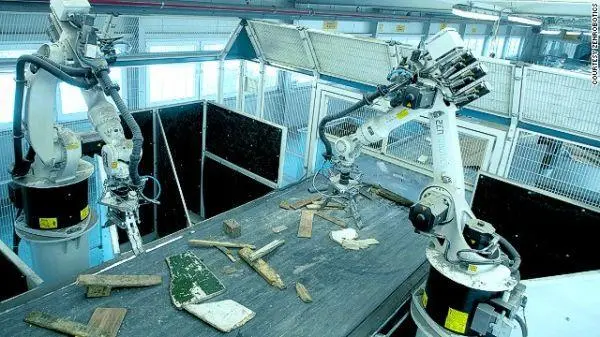
Obviously, recycling centers play a vital role in reducing the amount of waste accumulated in landfills and urban waterways. Of course, the functioning of these centers has faced many problems during the outbreak of the Covid-19 disease. Because most of the labor force has lost.
But the good news is that recycling robots, which provide their necessary power through artificial intelligence, have come to the aid of city managers during critical days and have taken an important role in waste recycling.
These robots are designed in such a way that they categorize waste materials well and correctly and minimize the need for human labor to perform similar actions.
This strategy will not only reduce the cost of recycling in the long run, but it will help a lot in the better separation of waste, and this will play an important role in reducing the accumulation of waste materials in landfills.
3) Mechanisms for determining the weight of garbage trucks
Weighing mechanisms act as sensors to determine the level of waste. In this way, it is installed on the truck and informs the managers about the waste when evaluating the filling of each truck.
In fact, these mechanisms report the weight of waste in each truck to the information processing center in real time, and as a result, the responsible authorities know the approximate time when the trucks are full and inform the driver to empty it.
City managers can use this technology to determine the exact time to send trucks to landfills outside the cities and prevent premature travel and emission of polluting gases.
4) Pneumatic waste pipes
Due to the significant increase in the population of cities, the need to find approaches for waste management increases. Because the reverse of this case, i.e., negligence in the management of waste materials can lead to the accumulation of waste even in the streets of cities. Of course, the negative consequences of this event are obvious to everyone.
Municipal workers in some parts of the world are trying to minimize this crisis by installing pneumatic trash cans that connect a series of underground pipes.
In this technology, waste is directed to the waste burial center through pipes installed underground, and as a result, the presence of waste materials in the city is minimized.
#wastemanagement #technology #urbanrecycling #smartmanagementtech #tech #wastetechnology